Bare Necessities
05-13-2026 at 06:58 pm
Summary: On this page I go over the art supplies I couldn’t live without. This is more about the genre of art supply than the product itself, but I am listing items found in My Favorite Art Supplies.
Back 2 Basics
My more recent artistic experiences have taught me a lot about the bare minimum I need to be able to create.As someone who tends to lean towards maximalism, I have a LOT of art supplies that I switch out regularly. I’ve noticed a handful of supplies I tend to reach for the most, that stand the test of time as other supplies get tested and rotated out. If I was going on a trip and had to pack as light as possible, what would I bring?
✵ Table of Contents ✵
| Tier | Supply | Function |
|---|---|---|
| Tier 1 | Mechanical Pencil + Lead | Drawing supplies. Mechanical pencil means no sharpener or sharpener mess. |
| Mechanical Eraser | Separate from mechanical pencil means I rarely run out. It also gives me more control. | |
| Sketchbook | Something to draw on…just whatever fits the situation. | |
| Tier 2 | Fine Liner | Doodling makes fine liners an essential, but they function well with finished pieces. |
| Kneaded Eraser | Kind of a luxury but functions so differently from the mechanical eraser that it is worth having separate when space permits. | |
| Tier 3 | Acrylic Markers | My favorite color medium. Whole sets are helpful for when I want to travel. |
Tier 1 - “Barest of minimums.”
These art supplies are the things I use the most. They’re in almost every single thing I draw and will always be included in any travel sketch kit I create. I use these so much that I have multiples of each in case I lose one (a frequent, unwelcome occurrence).
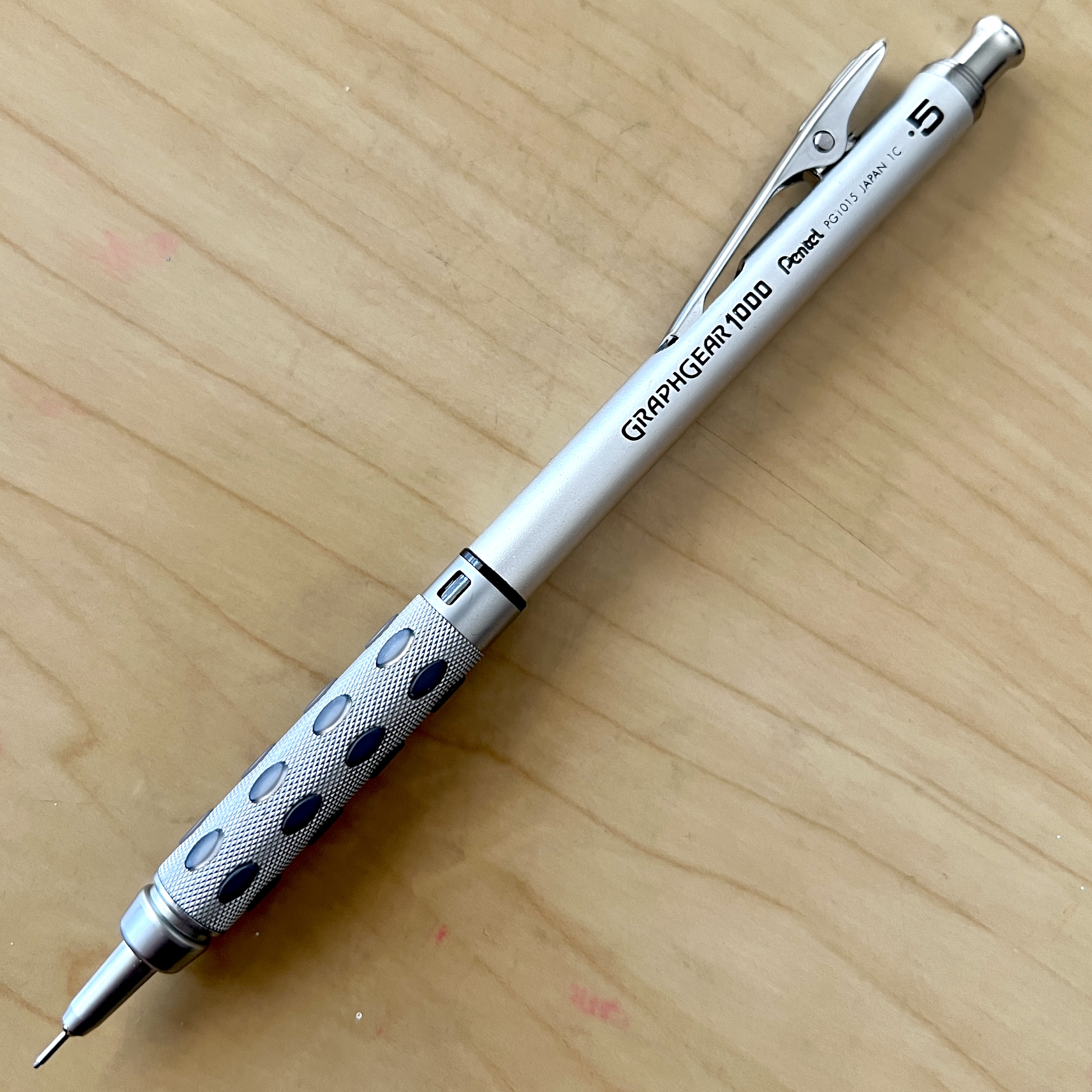
Mechanical Pencil
I sketch primarily in pencil because I like being able to erase. Most non-doodle pieces start with a pencil sketch. Mechanical pencils specifically have a lot of benefits that work with my artistic process.
Current Supplies
Why mechanical?
- I don'’t have to sharpen a mechanical pencil to keep it short, which feels like less waste.
- They keep a nice point.
- Less mess because I don’t have to deal with wood shavings.
- Lead refills are lighter than pencil sharpeners, and I don’t even have to keep lead refills if I don’t need to as the barrel holds multiple pieces of lead.
- Generally, mechanical pencils have replaceable erasers, which is handy.
Why 0.5?
I find larger sizes (2.0, 0.9, even 0.7 most of the time) don’t stay crisp enough for long enough. And the 0.3 size is just too small and brittle for the amount of pressure I naturally put on the lead. 0.5 is the best middle-ground.
Why F?
The lighter (or harder) the lead; the more likely I’m going to press hard in order to see the lines better. So 4H is great to not have a lot of graphite residue but it’s also impossible to darken. HB is too soft and smudges too easy, so anything softer is a no go beyond shading. H is a little too light but works well enough. This left F in the Goldilocks zone: not too hard, not too soft.
It’s been a long process of trial and error to determine what type of graphite I like best and of course it’s a weird grade. F allows me to shade enough to give sketches depth but is light enough to erase easy and keep things relatively clean.
Mechanical Eraser
I’ve found I absolutely need an eraser separate from any pencils I use. Pencil erasers wear down over time and become unusable. And even ones with replacements (like mechanical pencils) just means more steps that probably won’t happen. I keep mechanical pencil erasers intact just in case I lose my main eraser.
Current Supplies
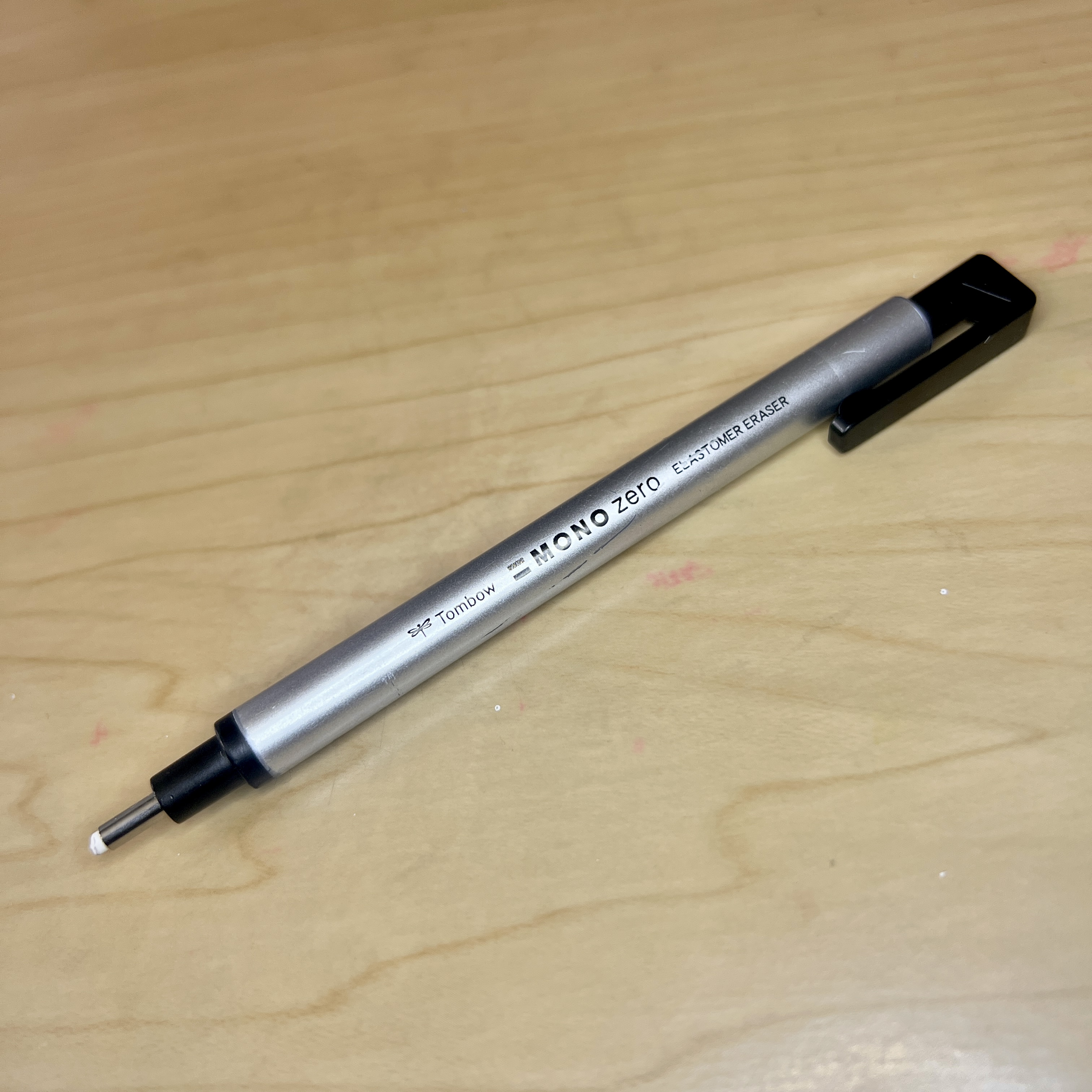
Why this size?
I like having a small size to help sculpt shapes easier. Precision is key for me, even if it means sacrificing quicker erasing with a larger eraser.
Why this type?
I liked other types of erasers but the Tombow eraser just happens to be a white eraser, so…
It works well, that’s all that matters.
Sketchbook
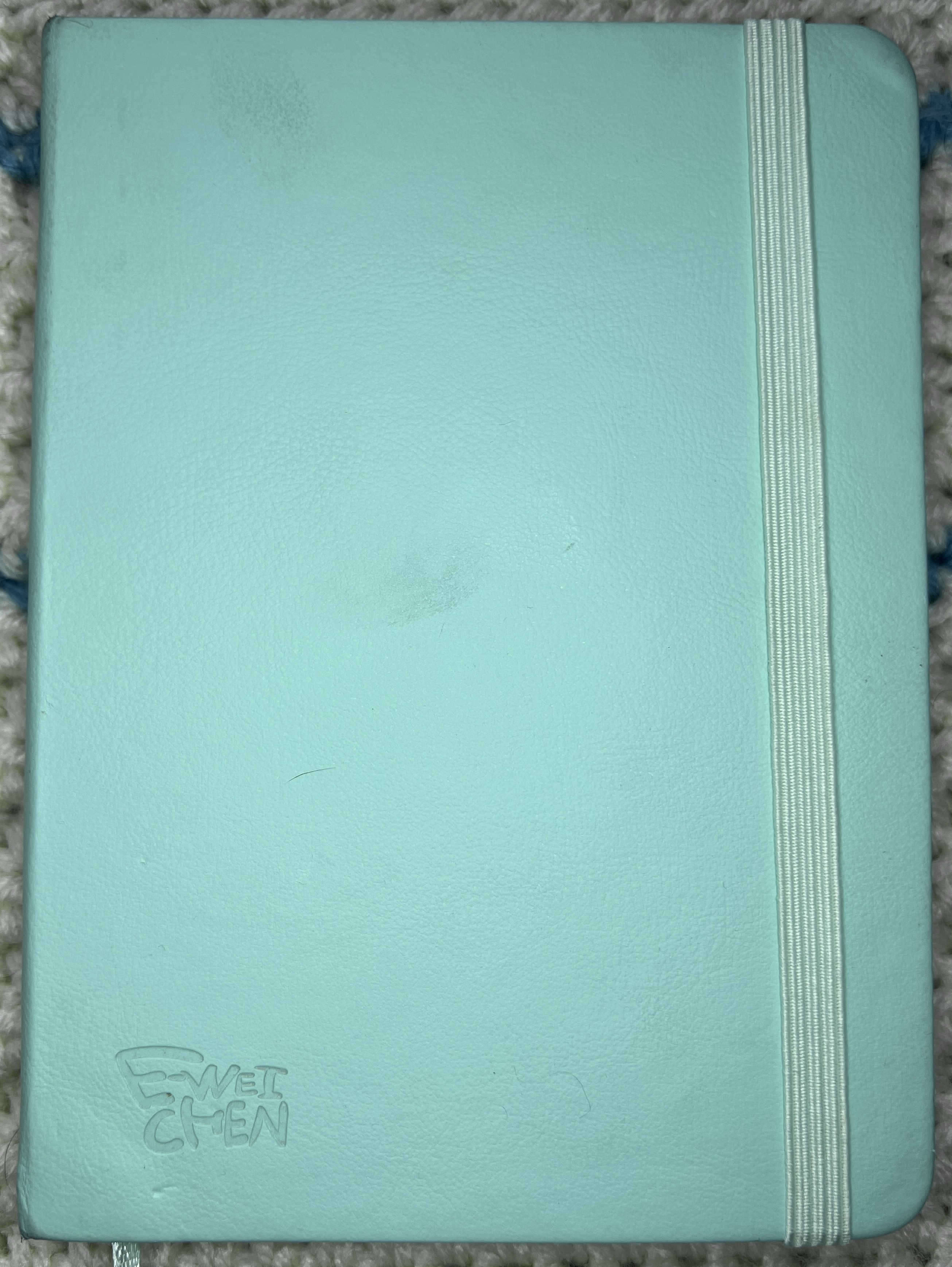
A sketchbook is a must. I used to not work in sketchbooks for so long but they are so handy. My most common type uses mixed media paper and is no larger than letter size, though typically I stick around A5 at the largest. I’ve used spiral and hardbound and they both have their strengths and weaknesses, but I’ve settled on hardbound.
My favorite paper is the Bee Paper Super Deluxe Paper, but because it only comes in spiral bound, I only use the paper for loose pieces. When I focus more on sketchbooks, I tend to focus less on this paper, even though it is my favorite. Luckily, the Canson and Ohuhu replacements work very nicely!
Which sketchbook I choose depends on the goals.
- Travel Sketchbooks = small sizes with thicker paper.
- Main Sketchbooks = can be any size but I tend to lean portable.
- Specialty Sketchbooks = sketchbooks with specific themes or where every page is a finished piece.
For more information about sketchbook types and themes, check out All About Sketchbooks.
Current Supplies
- Canson XL Mixed Media Sketchbook (B5)
- Canson Graduate Sketchbook (Letter)
- Ohuhu Mixed Media Sketchbook (8.3x8.3)
- Mifuner Pocket Sketchbook
- Flunbrato Watercolor Sketchbook (8.5x8.5)
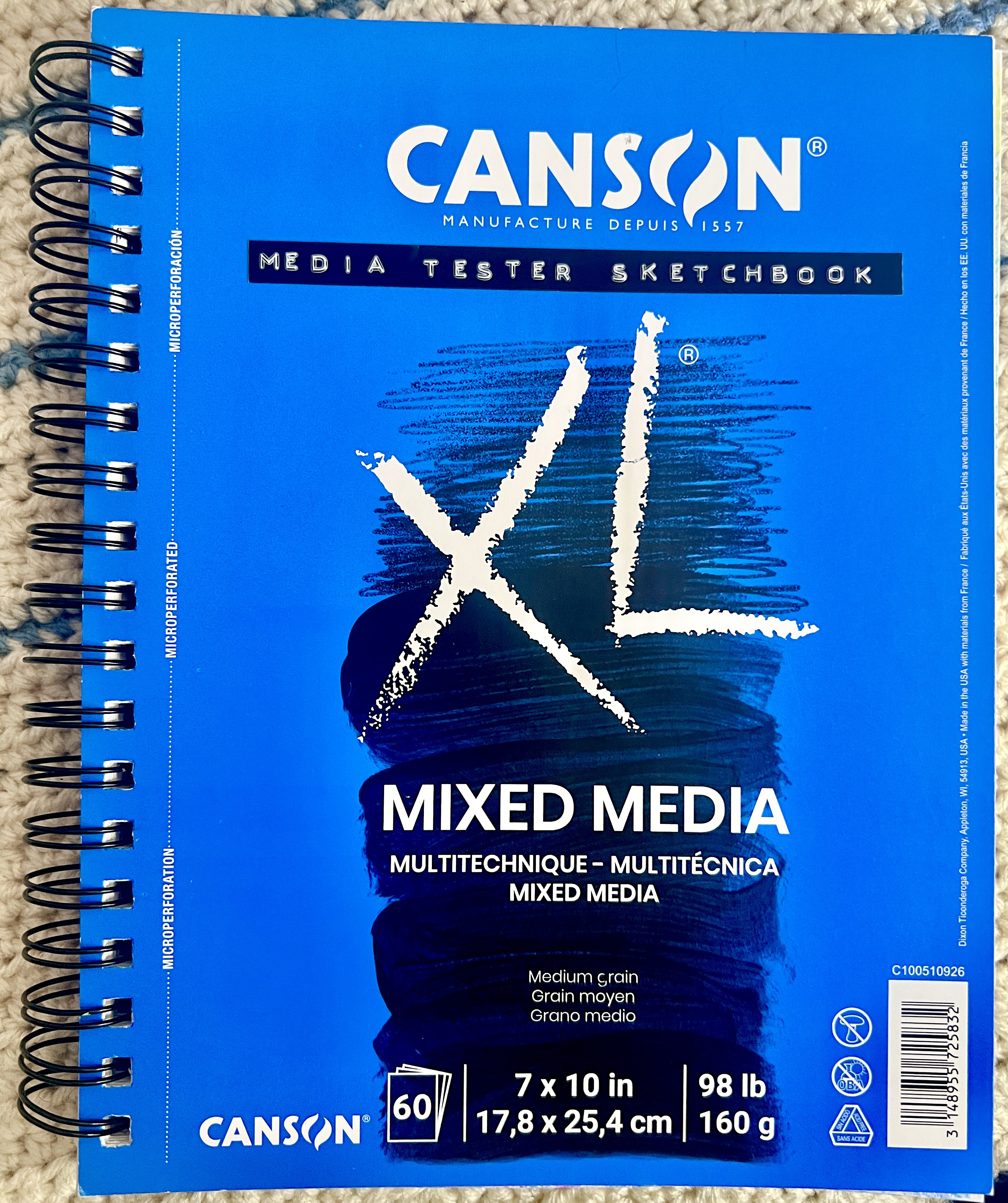
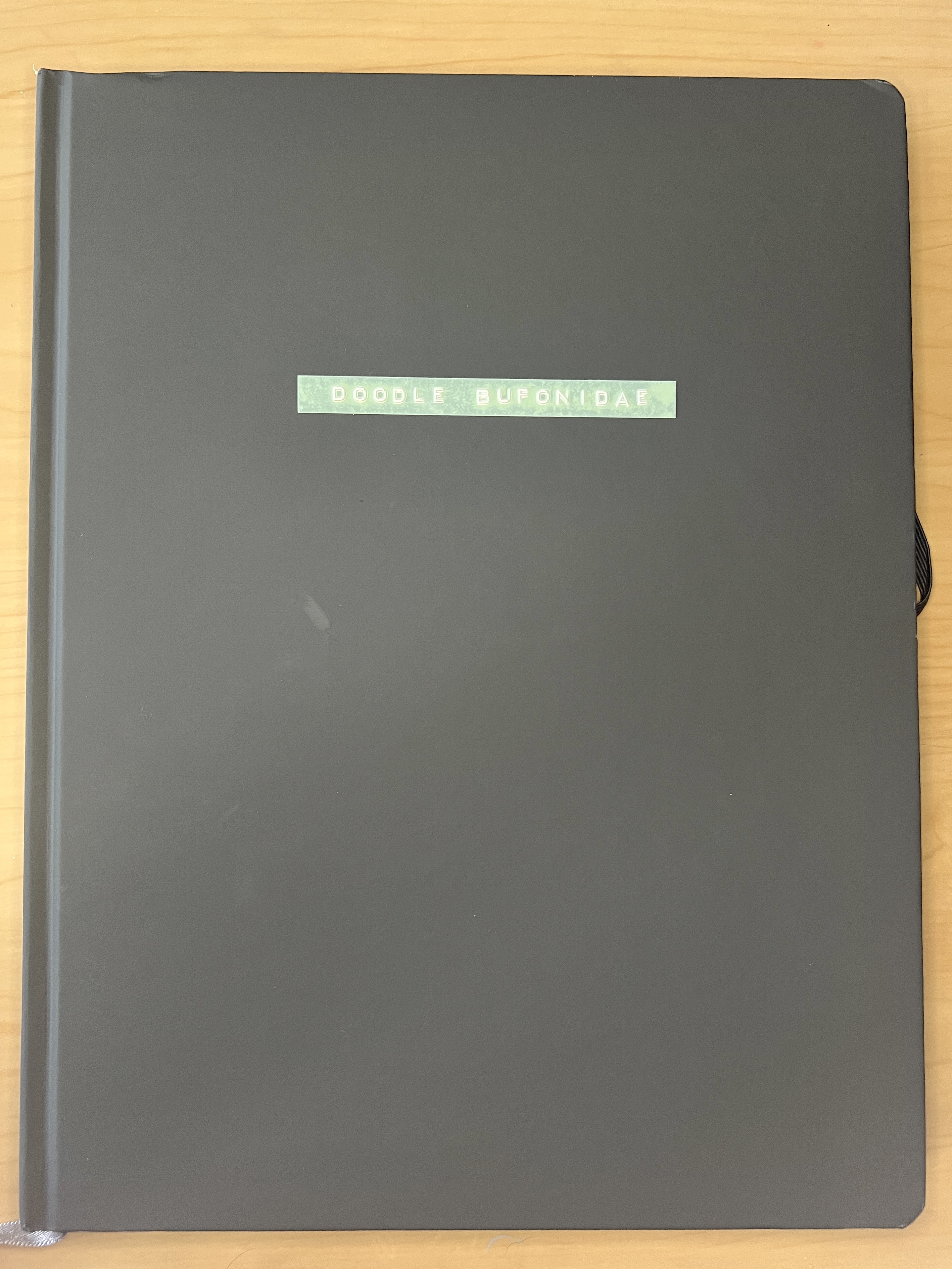
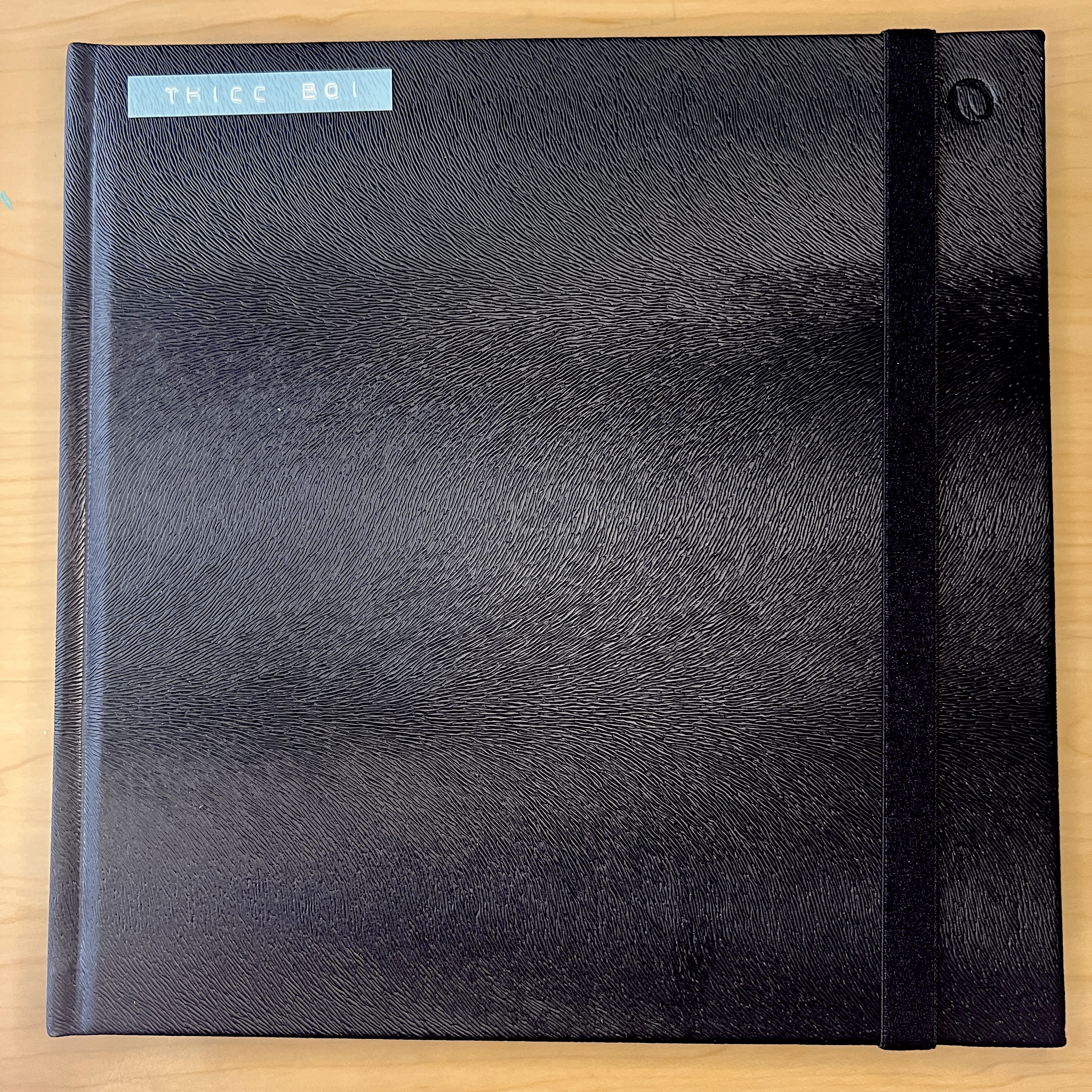
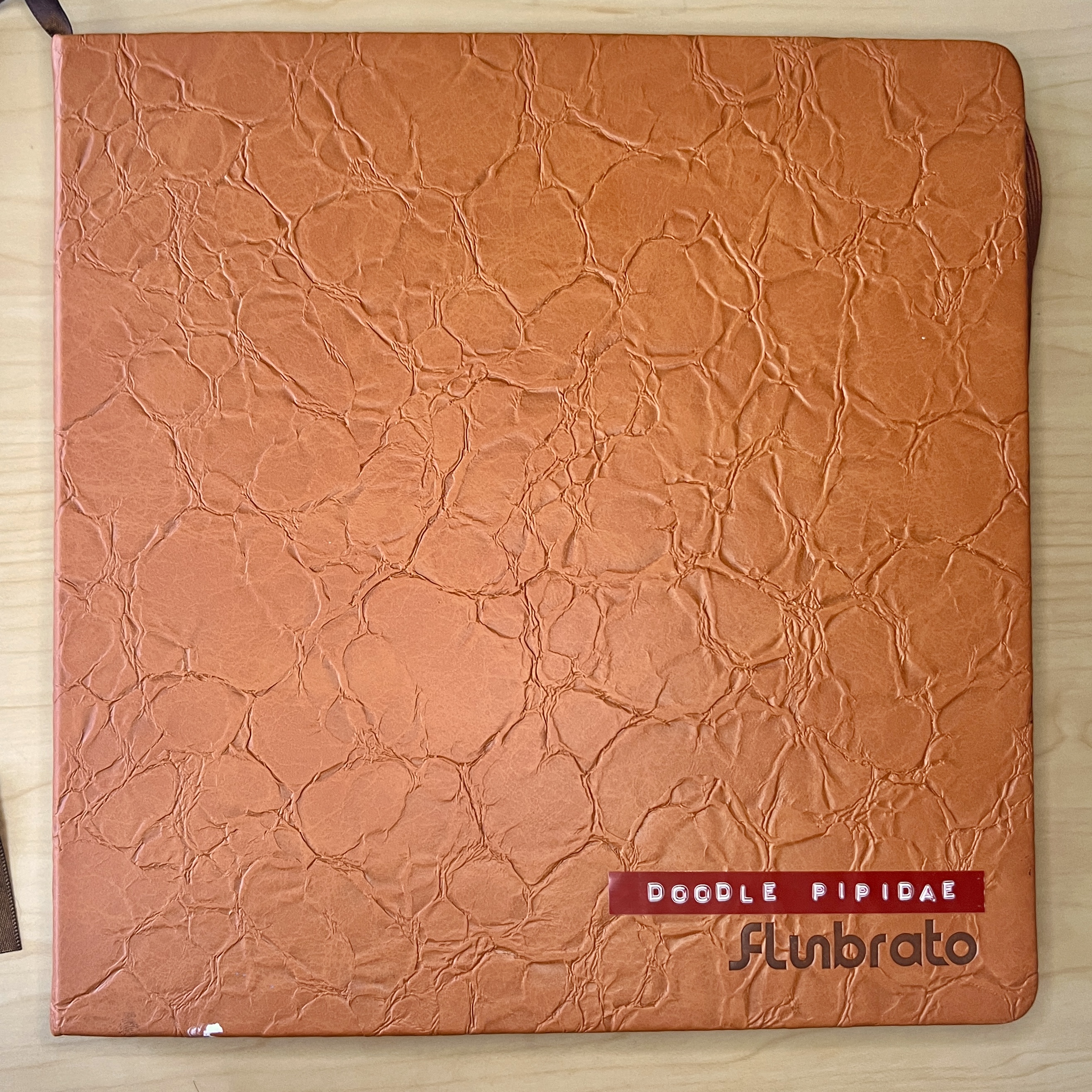
Why Mixed Media?
- Typically has stronger paper that can work with more media than specialized paper.
- Mixed-Media is typically thicker paper, which can hold up better.
- Mixed-media has a nice toothy texture that is usually still smooth enough to accept fine liner pens.
What Size?
- Small Sizes | Pocket - A5: I have found that smaller sizes give me an excellent boost in creativity because I finish pages faster. But there’s a downside of not having a lot of space to work. I constantly found myself bumping into the edges of page and drawing things so much bigger than I should. I know this is a skill issue where I can’t seem to draw smaller, but I think that means I need bigger paper. Small sizes are very portable and much easier to handle without needing a desk.
- Large Sizes | 8x8 - Letter: Large sizes give me the space I need and the final results come out looking much more stunning. But larger pieces take longer, and the large sizes are hard to handle without a desk. Even so, I’ve figured out how to use the sketchbook successfully and have recently enjoyed larger sizes to smaller ones.
What shape?
I love square sketchbooks. I don’t know what it is about the evenness of square but it feels the best. Portrait or horizontal sketchbooks are great but I often struggle with the lack of evenness.
Tier 2 - “Main essentials.”
For when I have more sit-down downtime while out-and-about. Maybe I’m waiting between classes, maybe I’m waiting on a ride, maybe I’m quickly visiting someone.
I will usually have a kit that fits into a single zipper case I can throw in whatever day-bag I’ve chosen to adorn myself with. These are my most common travel art supplies.
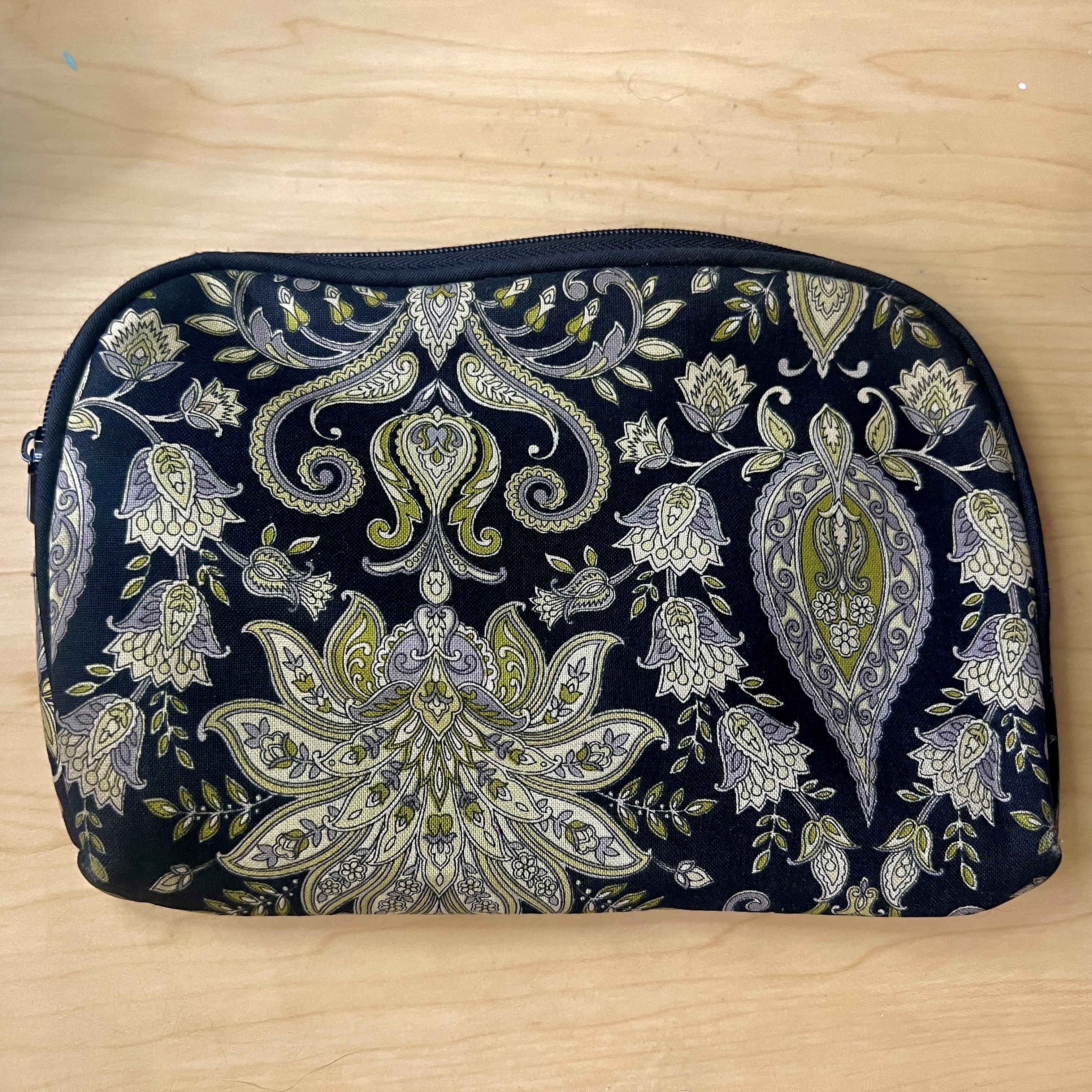
This kit includes everything from Tier 1, with the additions of:
Technical Pencils
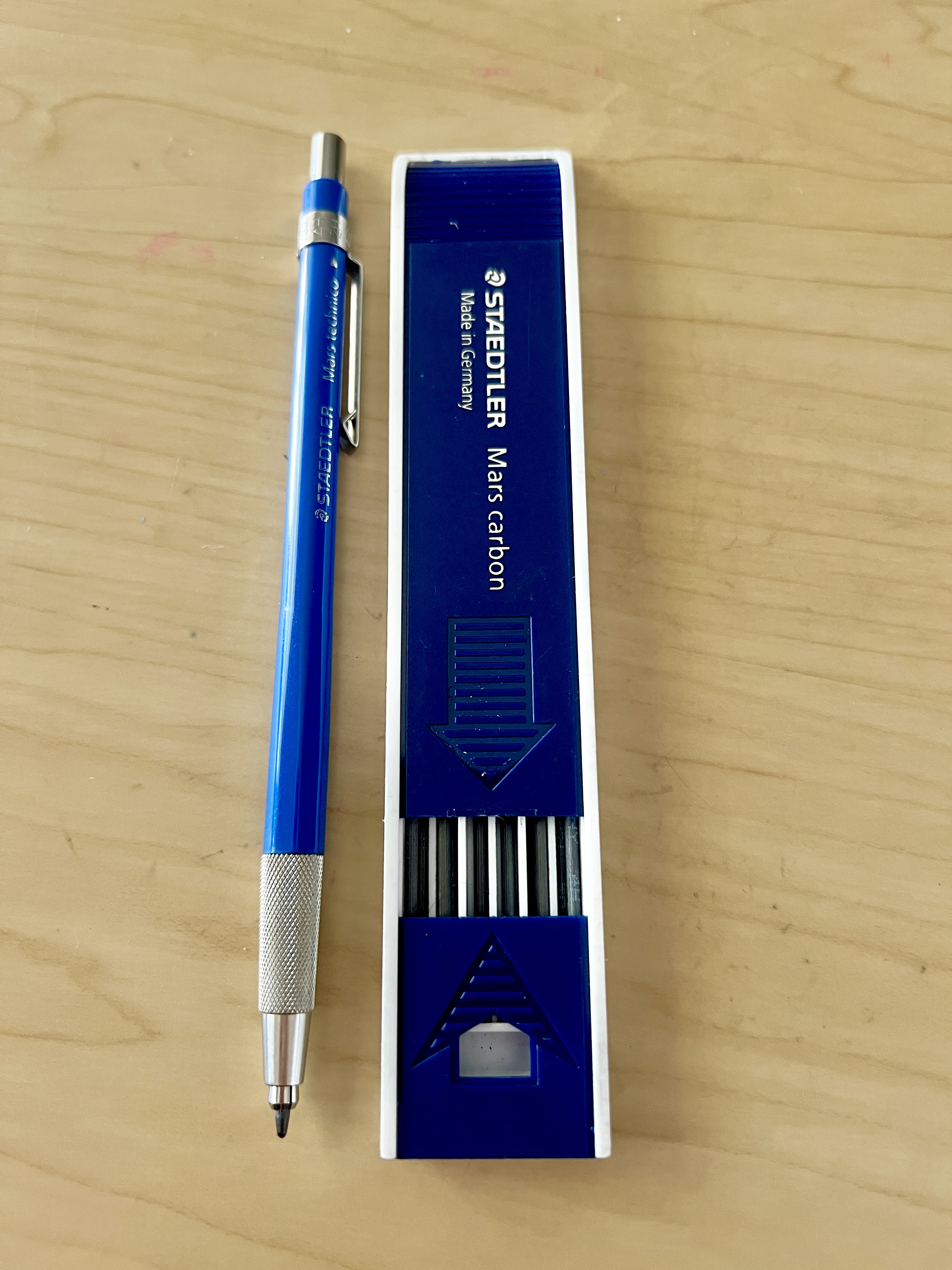
If I have the space, I like to include 2mm technical or drafting pencils. Sometimes I prefer the 2mm size to any of the smaller sizes, but I find the smaller sizes are a little more convenient as I don’t have to sharpen them. 2mm sizes still require sharpening, and they use a specialized, tiny sharpener. This is messier than 0.# mechanical pencils, and requires an extra tool to use if you want sharp pencils.
For more information, please refer to Grading Pencils.
Current Supplies
- STAEDTLER Mars Technico Mechanical Pencil + STAEDTLER Mars 2mm 4H Lead
- Uni Mitsubishi 2mm Pencil Sharpener (not pictured, can’t find it)
What Lead?
I find that 2mm pencil leads are softer than the 0.# sizes, though they may be the same richness after a thick layering. I tend to prefer H grades, and have often used 4H 2mm lead to sketch as it is very light and easy to erase. The problem with 4H is that I will instinctually press harder to get a darker shade, and that damages paper. I’ve recently tested the Uni Mitsubishi 2H 2mm lead and I think it’s very promising!
At the end of the day, I will usually choose a lead opposite of whatever I’m already carrying. If I’m using an F 0.5 lead, then I’ll probably use a 4H 2mm lead.
Fine Liner Pen - 0.3
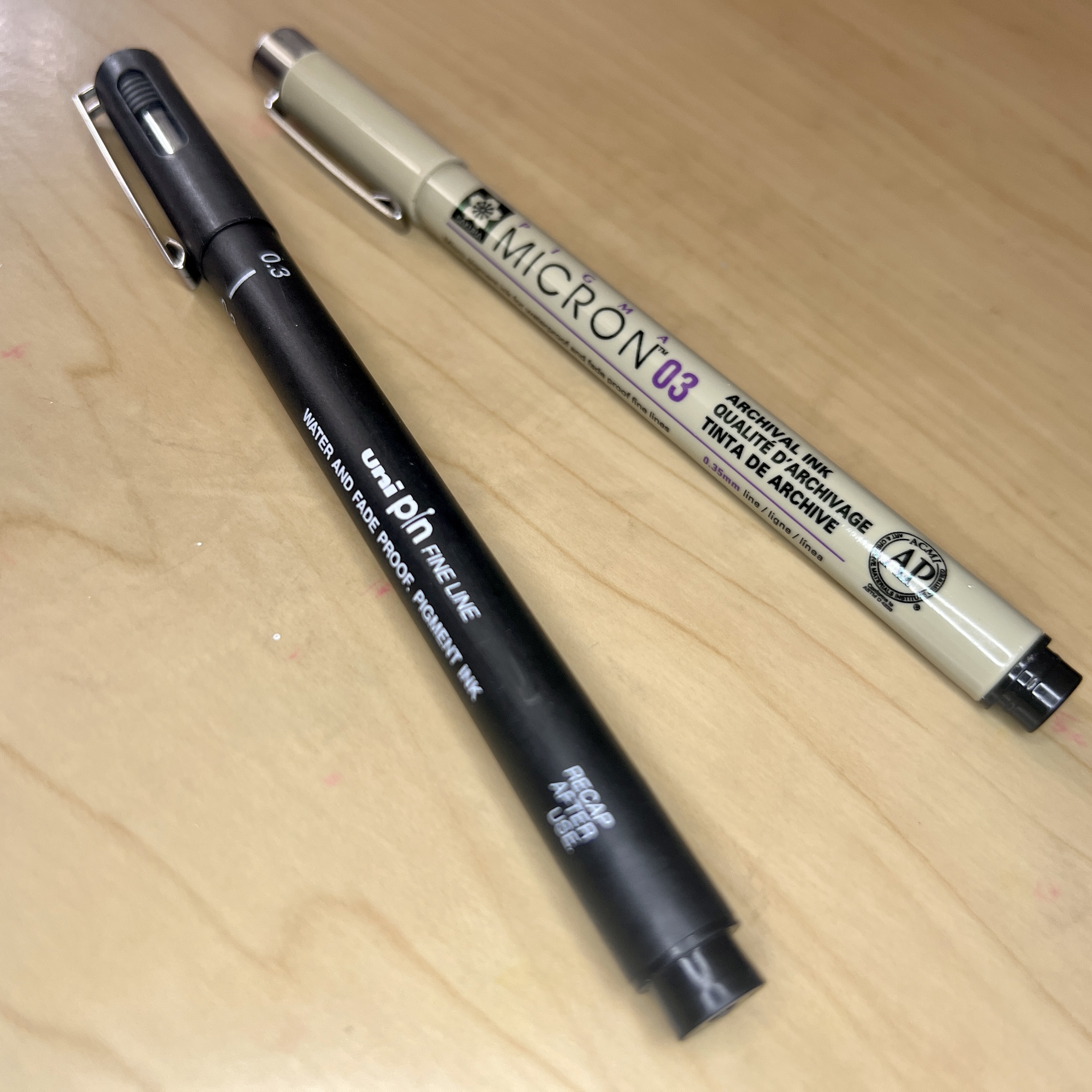
If I have the space, time, or motivation, a fine liner is a must. If I’m doodling, it becomes a necessity. 0.3 sizes typically give me the size lines I want while still allowing me a lot of intricate detail.
If I’m just trying to draw, I don’t really use pens. Fine liners come in handy when I want to doodle or create a full, completed piece. My doodling alone makes fine liners an essential.
Current Supplies
Why 0.3?
I find 0.3 to be a good middle-ground between the precision of smaller nibs and the boldness of larger ones.
Kneaded Erasers
Kneaded erasers can be really useful to help you not damage paper. They’re really good for picking up loose or extra dust from dry media. They are good to lift just enough graphite to lighten a sketch without completely erasing it, helpful for pieces with more work.
Current Supplies
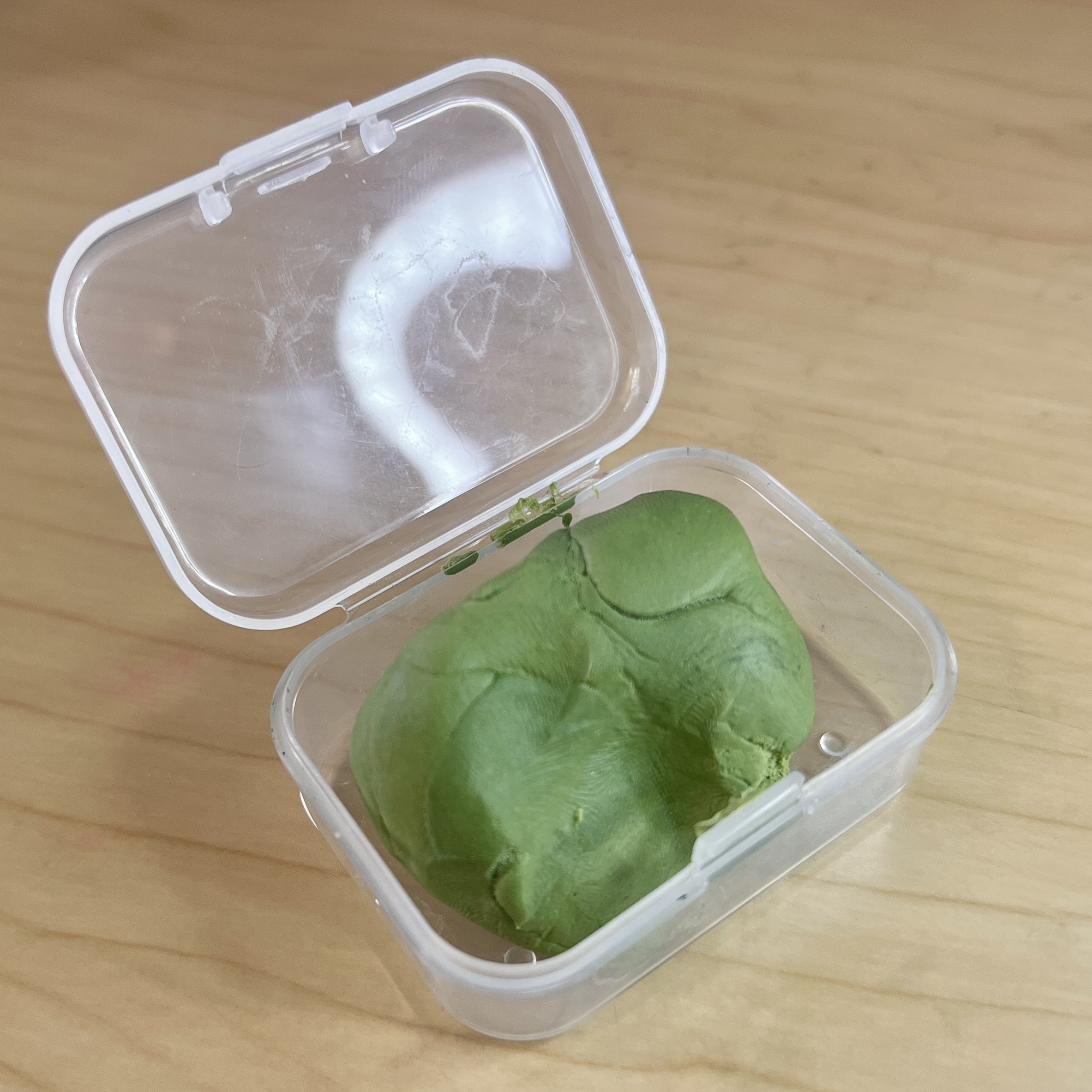
Why the RYB set?
I waned to mix colors to create a purple, green, and orange erasers. Any chance I get to add color in my life, I’m going to take it.
Why is this not a tier 1 essential?
I only really use kneaded erasers under specific circumstances, and that lack of use makes them less practical.
Tier 3 - “Core Color.”
A color medium can be really nice to have if there’s space and time. This type of medium is plentiful when I’m home, but has to be consolidated into a single set when I travel.
This kit includes everything from Tier 2, with the additions of:
Acrylic Markers
Acrylic markers became a quick favorite because they are portable paint that is very forgiving and dries permanent. They would be my one color medium of choice. Direct ink acrylic markers (the ones you have to shake) are definitely preferred to other types. I also prefer brush tips to anything else.
I’ve noticed that every single acrylic marker brand I’ve bought has worked well in practice. While markers will vary consistency, color, and opaqueness, I’ve always been able to get good results with the cheapest brand (at the time, this was the ARTISTRO Acrylic Paint Markers).
The downside to Acrylic markers is that you need to have a bunch of different colors to get a good depth. I tend to travel with 48-60 set packs.
Current Supplies